
If you’ve had a cup of coffee in Puerto Rico lately, you’ve probably heard the conversation. Prices are going up. Some bags are hard to find. People are asking why.
I want to answer that the way we try to do everything at Cuela: by telling you the whole story, not just the convenient part of it.
Our farmers have been waiting a long time for this.
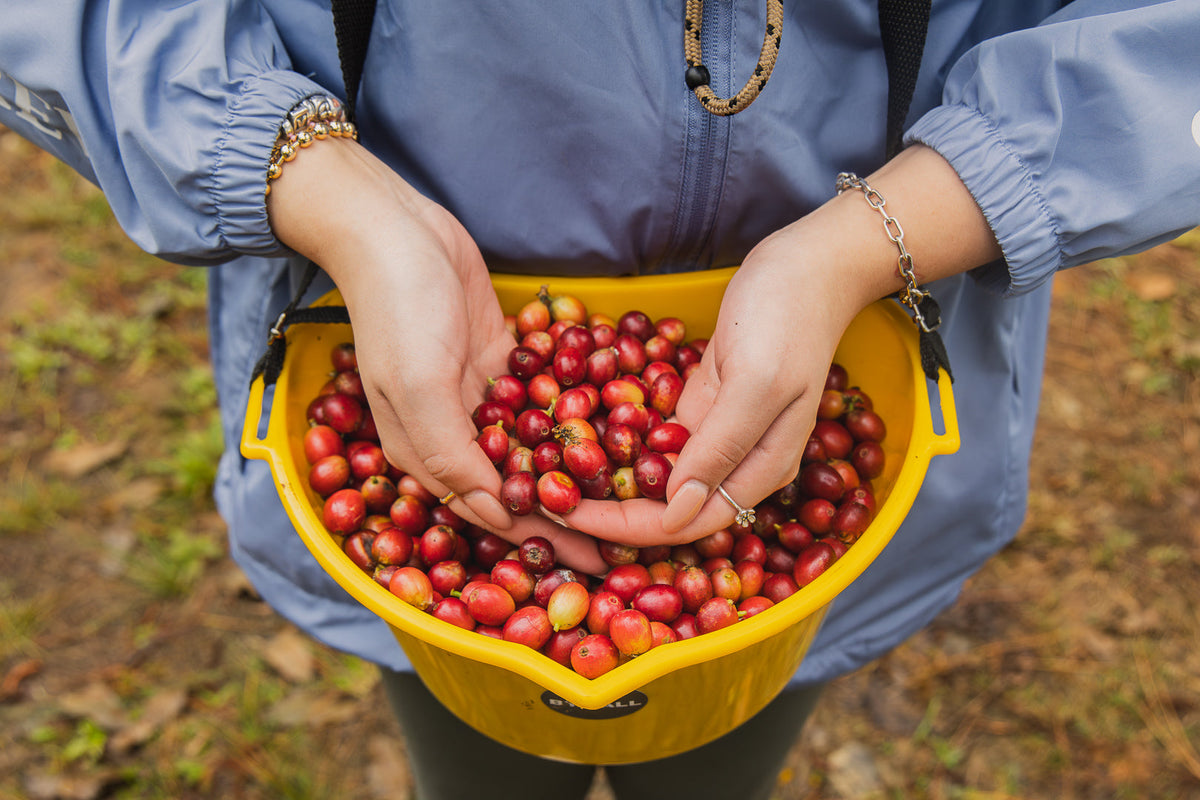
On November 13, a new minimum price for Puerto Rican coffee takes effect. It’s the price farmers receive for every almud, a traditional measure of about 28 pounds of ripe coffee cherries, and it’s set by DACO, Puerto Rico’s Department of Consumer Affairs.
Since 2023, that minimum has been stuck at $18. Think about everything that has gotten more expensive in the last three years: fertilizer, labor, fuel, equipment. Now imagine being paid the same for your harvest the entire time.
The people who grow our coffee aren’t abstractions to us. They’re the reason Cuela exists. So when I hear that farmers are finally getting a fairer price, I don’t see a cost increase. I see a correction that was long overdue.

The part of the story almost nobody tells.
Here’s something most coffee drinkers on the island don’t know: Puerto Rico only produces about 20% of the coffee it drinks. The other 80% is imported.
That imported coffee is bought by the Puerto Rico Department of Agriculture and resold to local roasters. And the system was designed with a purpose. The money made from selling imported coffee is supposed to fund subsidies and incentives for Puerto Rican farmers. Coffee from abroad was meant to help keep coffee from here alive.
That’s not what’s been happening. Right now, the Department buys imported coffee at $450 per quintal (100 pounds) and sells it to roasters at $375. That’s a $75 loss on every quintal, and the government has been absorbing it since 2023 because the price to roasters was never adjusted.
So instead of a program that supports farmers, we’ve had a program that loses money. And while it gets sorted out, imported coffee on the island has become scarce. New inventory is expected at the end of October.
Now, the honest part about us.
I could stop here. But it wouldn’t be the full truth, and the full truth matters more to me than looking perfect.
At Cuela, we also use imported coffee.
Our mission hasn’t changed. We exist to tell the stories of Puerto Rico’s best coffee growers and roasters, and to put their coffee in your hands. But when the island only grows a fifth of what it drinks, no roaster here can run on Puerto Rican coffee alone. Every roaster has to find a balance between local and imported beans. Without that balance, the business can’t sustain itself. And a business that can’t sustain itself can’t keep buying from local farmers either.
Three of our blends combine Puerto Rican and imported coffee: Don Pello Premium (gold label), Café 2150, and Otoao. Because of the import shortage, they may be harder to find during October. If they’re missing from the shelf, now you know why. They’ll be back as soon as the new inventory arrives.
Everything else we offer is 100% Puerto Rican. And when it is, we’ll always tell you exactly where it came from: the farm, the farmer, the region.
What you can do.
You don’t need to do anything dramatic. Just keep choosing. Every time you pick a coffee that’s 100% from here, you’re casting a small vote for Puerto Rican coffee to still exist tomorrow, and for the people behind it to keep doing what they love.
That’s what we’re betting on. Thank you for betting on it with us.